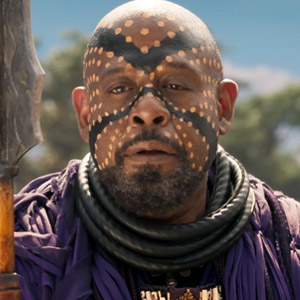
Long ago, five African tribes warred over a meteorite composed of vibranium, a rare extraterrestrial metal with extraordinary properties. One warrior shaman, Bashenga, ingested a Heart-Shaped Herb mutated by vibranium exposure, granting him enhanced strength, agility, and heightened senses. He became the first Black Panther and united four of the five tribes under a single banner, forming the nation of Wakanda. The Jabari Tribe refused to join and withdrew into the mountains. Over generations, Wakanda developed into a technologically advanced civilization powered by vibranium while deliberately isolating itself from the outside world and maintaining the façade of a poor, underdeveloped African nation.
In 1992, King T’Chaka travels to Oakland, California, where his brother N’Jobu has been working undercover. T’Chaka discovers that N’Jobu has been collaborating with arms dealer Ulysses Klaue to steal vibranium from Wakanda and distribute it globally. N’Jobu’s partner, Zuri—also a Wakandan spy—confirms the betrayal. When confronted, N’Jobu threatens Zuri, forcing T’Chaka to kill his own brother to protect Wakanda’s secrecy. T’Chaka then leaves behind N’Jobu’s young son, Erik, in America, ordering Zuri to conceal the truth. Erik grows up in hardship, eventually becoming a U.S. black ops soldier, taking the name Erik “Killmonger” Stevens and harboring a deep desire for vengeance against Wakanda.
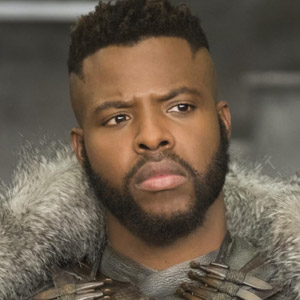
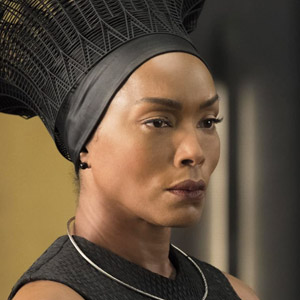
In the present day, T’Challa returns to Wakanda after T’Chaka is killed during events linked to Helmut Zemo. As heir to the throne, T’Challa is crowned king but must first undergo traditional challenges. Before his coronation, he rescues his former lover Nakia from an undercover mission in Nigeria and reconnects with his mother Queen Ramonda and his brilliant sister Shuri. During the coronation ceremony, T’Challa ingests a ceremonial herb that temporarily removes his powers, then publicly invites challengers for the throne. M’Baku, leader of the Jabari Tribe, challenges him in ritual combat. Despite lacking enhanced abilities, T’Challa defeats M’Baku and spares his life, earning his respect.
After becoming king, T’Challa consumes the Heart-Shaped Herb and enters the Ancestral Plane, where he meets a vision of his father. T’Chaka praises him but warns him of difficult times ahead and urges him to surround himself with trusted allies. T’Challa awakens as the Black Panther, now fully empowered and responsible for Wakanda’s future.
Meanwhile, Klaue steals a vibranium artifact from the British Museum with assistance from Erik Killmonger. Wakanda tracks Klaue, and T’Challa, along with Okoye and Nakia, attempts to capture him at a black market exchange in Busan, South Korea. The mission goes awry when CIA agent Everett Ross is revealed to be the buyer. A chaotic chase through the city ensues. Klaue is captured but later freed by Killmonger, who kills him and brings his body to Wakanda to claim his identity and challenge for the throne.
Killmonger arrives in Wakanda and invokes royal challenge rights. He defeats T’Challa in ritual combat and throws him over a waterfall, where he is presumed dead. Killmonger then takes the Heart-Shaped Herb, burns the remaining supply to prevent opposition from rising, and assumes the throne as king. He reveals his plan to distribute Wakandan weapons globally to oppressed people, aiming to spark worldwide revolutions in honor of his father’s ideology. W’Kabi and portions of the Wakandan army support him, escalating tensions into civil war.
T’Challa is rescued by the Jabari Tribe, who have been caring for his comatose body in repayment for his earlier mercy toward M’Baku. Nakia retrieves a surviving Heart-Shaped Herb, which is used to revive him. T’Challa returns to the Ancestral Plane and confronts his father, condemning Wakanda’s past isolationism and revealing the consequences of abandoning Erik. T’Chaka admits his mistakes. T’Challa rejects staying in the ancestral realm and chooses to return, determined to stop Killmonger.
Back in Wakanda, civil war erupts. Shuri, Nakia, Okoye, and the Dora Milaje fight against Killmonger’s forces, while Everett Ross uses a remote aircraft to shoot down vibranium weapons shipments headed overseas. W’Kabi and his troops ultimately surrender after confronting Okoye. Meanwhile, T’Challa battles Killmonger at the vibranium mine. Their advanced Black Panther suits temporarily cancel each other out due to sonic disruptors in the mining environment, reducing the fight to raw combat. T’Challa eventually overpowers Killmonger and mortally wounds him.
T’Challa chooses mercy, offering Killmonger healing and a chance to live. However, Killmonger refuses, preferring to die free rather than be imprisoned. T’Challa honors his wish and watches him die while overlooking Wakanda’s sunset.
After the conflict, T’Challa decides to end Wakanda’s isolation. He establishes outreach efforts, beginning with purchasing the Oakland property where N’Jobu died to create a community center and aid program. He later appears before the United Nations, revealing Wakanda’s true identity and signaling its intention to engage with the world. In the final moments, Wakanda opens its doors to global cooperation, while Bucky Barnes is shown recovering there under Shuri’s care, symbolizing Wakanda’s new role on the world stage.