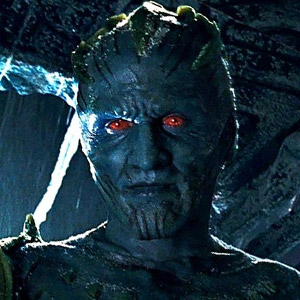
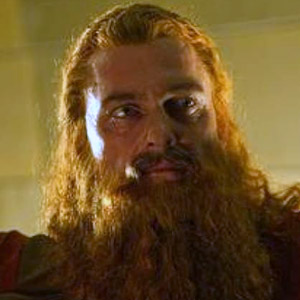
In 965 A.D., Odin, ruler of Asgard, recounts a brutal war between the Asgardians and the Frost Giants of Jotunheim. Led by Laufey, the Frost Giants sought to plunge Earth into an eternal ice age using the powerful Casket of Ancient Winters. Odin and his warriors intervened, defeating the Frost Giants, seizing the Casket, and restoring peace across the realms. The war leaves a lasting impression on Odin, shaping his belief that only a wise and measured ruler should inherit his throne.
Years later, Odin raises his two sons: the bold, impulsive Thor and the intelligent, reserved Loki. Though both are told they are worthy, Odin emphasizes that only one will become king—a statement that plants early seeds of rivalry and insecurity, particularly in Loki.
In the present day, Thor stands on the brink of becoming crown prince of Asgard. The kingdom gathers for his coronation, celebrating his strength and heroism. However, the ceremony is abruptly interrupted when Frost Giants infiltrate Asgard’s vault in an attempt to reclaim the Casket. They are swiftly destroyed by the enchanted automaton known as the Destroyer. While Odin remains calm, recognizing the attack as a potential provocation, Thor reacts with anger and a thirst for retaliation.
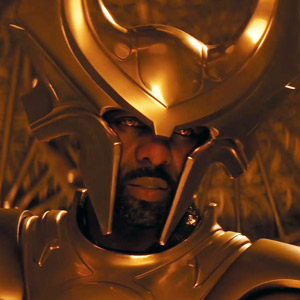
Against Odin’s direct orders, Thor gathers his closest allies—Sif and the Warriors Three—and convinces Loki to join them on a mission to Jotunheim. With the reluctant permission of Heimdall, guardian of the Bifrost, they travel to the Frost Giants’ realm. There, Thor confronts Laufey, whose taunts inflame Thor’s pride. Although Loki briefly diffuses the tension and secures safe passage out, Thor’s arrogance leads him to attack, igniting a fierce battle.
During the fight, Loki experiences a shocking reaction when touched by a Frost Giant—his skin turns blue and frost-covered, hinting at a hidden truth about his origins. The group is soon overwhelmed until Odin arrives, rescuing them but further straining relations with Jotunheim. Laufey declares that peace is over, and war looms once again.
Back in Asgard, Odin confronts Thor in a moment of deep disappointment. Seeing that Thor values glory over wisdom, Odin declares him unworthy of the throne. In a dramatic act of punishment, Odin strips Thor of his powers and banishes him to Earth. He enchants Thor’s hammer, Mjølnir, declaring that only one who is truly worthy may wield it.
Thor lands in the New Mexico desert, where he is discovered by astrophysicist Jane Foster, her mentor Erik Selvig, and intern Darcy Lewis. Initially believing him delusional, they bring him to a hospital. Thor struggles to adjust to mortal life, stripped of his strength and status, and is forced to confront humility for the first time.
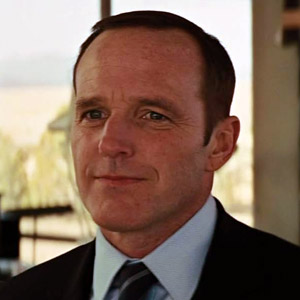
Meanwhile, Mjølnir crashes to Earth, creating a crater that attracts both civilians and the attention of S.H.I.E.L.D., led by Phil Coulson. The area is quarantined as they attempt to study the hammer, which no one can lift.
Determined to reclaim his power, Thor infiltrates the S.H.I.E.L.D. compound. Despite his combat skills, he is ultimately unable to lift Mjølnir. This failure devastates him, forcing him to accept that he is no longer the man he once was. Captured and interrogated, he is later freed by Selvig, who sympathizes with him.
Back in Asgard, Loki uncovers the truth about his origins: he is the son of Laufey, abandoned and taken in by Odin after the war. Feeling betrayed and questioning his identity, Loki confronts Odin, whose stress triggers the Odinsleep, a deep restorative coma. Loki assumes the throne as acting king, his internal conflict evolving into a desire for validation and power.
Loki secretly manipulates events to solidify his rule. He makes a deal with Laufey, promising to allow him access to Asgard in exchange for peace, while secretly planning to betray him. To eliminate Thor, Loki sends the Destroyer to Earth.
The Destroyer attacks the town where Thor resides, unleashing devastating energy blasts. Thor, now humbled, chooses to sacrifice himself to protect others. He confronts the Destroyer unarmed, offering his life in exchange for the safety of the innocent. The Destroyer strikes him down, seemingly killing him.
This act of selflessness proves Thor’s worth. Mjølnir lifts from the crater and returns to him, restoring his powers. Revived and transformed, Thor defeats the Destroyer with ease. Before leaving, he shares a heartfelt goodbye with Jane, promising to return.
Back in Asgard, Laufey attempts to assassinate Odin, but Loki kills him, appearing to be Asgard’s savior. However, Loki’s true plan is revealed: he intends to destroy Jotunheim using the Bifrost, proving himself worthy in Odin’s eyes by eliminating his own kind.
Thor returns and confronts Loki. The brothers clash, representing opposing ideals—Thor’s newfound humility versus Loki’s need for recognition. Realizing the Bifrost cannot be stopped otherwise, Thor destroys it, sacrificing his ability to travel between realms.
As the bridge collapses, both brothers fall into the void. Odin awakens in time to save Thor, but Loki, overwhelmed by rejection and despair, lets go and falls into space.
In the aftermath, Thor mourns Loki and reflects on his growth. Though separated from Jane due to the destruction of the Bifrost, he finds hope in Heimdall’s assurance that she continues to search for him.
On Earth, Jane resumes her research with new support from S.H.I.E.L.D. Meanwhile, Selvig is recruited by Nick Fury, who reveals the Tesseract—a powerful energy source. Unseen, Loki appears, subtly influencing Selvig, signaling that his story—and ambitions—are far from over.