
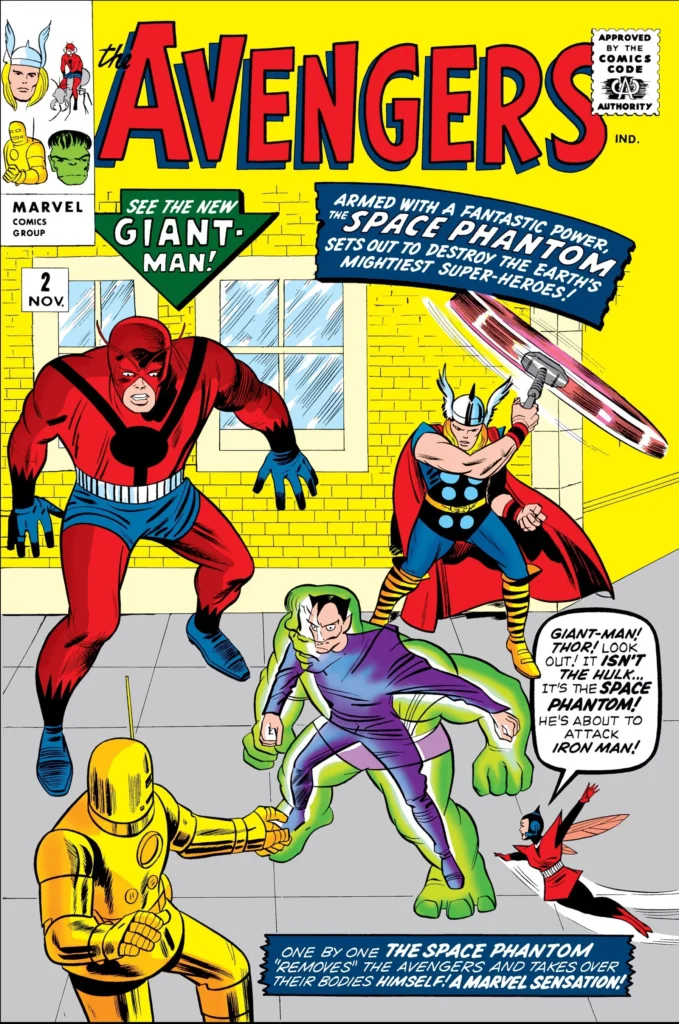
AVENGERS #2
The Avengers face their strangest challenge yet when a mysterious alien force threatens to turn Earth's Mightiest Heroes against one another. The Space Phantom, a shape-shifting being from another world, infiltrates the team by assuming the identities of powerful heroes and sowing confusion among the Avengers. As Iron Man, Thor, Hulk, Ant-Man, and the Wasp struggle to uncover the truth, they must overcome mistrust and unite against a foe who can become anyone. Stan Lee and Jack Kirby deliver a thrilling early Avengers adventure filled with deception, cosmic danger, and the unforgettable teamwork that defines Marvel's legendary super-team.
CREATORS
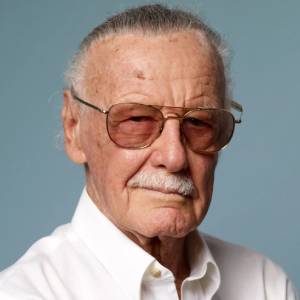
STAN LEE
WRITER/EDITOR

JACK KIRBY
PENCILLER
PAUL REINMAN
INKER

STAN GOLDBERG
COLORIST (UNCREDITED)
ARTIE SIMEK
LETTERER
CHARACTERS
MAIN CHARACTERS
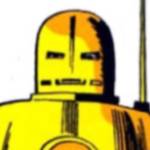
IRON MAN
ANTHONY 'TONY' STARK
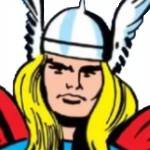
THOR
THOR ODINSON/DONALD BLAKE
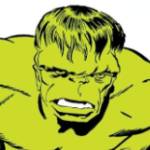
HULK
ROBERT BRUCE BANNER
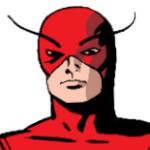
GIANT-MAN
HENRY 'HANK' PYM
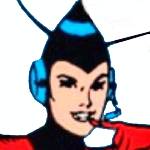
WASP
JANET VAN DYNE
ANTAGONIST
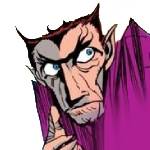
SPACE PHANTOM
FULL NAME UNREVEALED
SUPPORTING CHARACTER
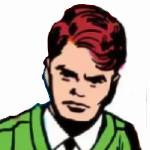
RICK JONES
RICHARD 'RICK' JONES
THE AVENGERS BATTLE... THE SPACE PHANTOM
The Avengers gather once again at Tony Stark's Manhattan mansion for a routine meeting. Despite having recently formed as a team, tensions already simmer beneath the surface. Thor and the Hulk exchange insults almost immediately, forcing Iron Man and Ant-Man to intervene before their disagreement erupts into a fight. Ant-Man and the Wasp arrive late, revealing to their teammates that they possess capsules that allow them to instantly alter their size. Although the heroes attempt to settle into a productive discussion, none of them realize that a far greater threat is approaching Earth.
Far beyond the planet, an alien known as the Space Phantom arrives after weeks of faster-than-light travel. Sent as the advance scout of a conquering extraterrestrial race, the Phantom's mission is simple: determine whether Earth's greatest defenders can be defeated. Possessing the ability to perfectly duplicate any living being, the alien lands unnoticed and immediately tests his power on a random pedestrian. By assuming the man's form, the original victim is banished to a strange dimension known as Limbo, a realm between existence and nothingness. Satisfied that his powers work flawlessly, the Space Phantom heads directly toward Avengers Mansion.
The alien infiltrates the mansion by posing as an ordinary visitor. Before the Avengers can question him, he secretly uses his powers on the Hulk, sending the real Hulk into Limbo and taking his place. Disguised as the green giant, the Space Phantom deliberately provokes the other Avengers. His unusually hostile behavior quickly ignites tempers. Iron Man and Thor become convinced that the Hulk has turned against them, and a confrontation breaks out. After successfully driving a wedge between the teammates, the disguised alien storms out of the mansion, pleased with the discord he has created.
Outside, the Space Phantom encounters Rick Jones, the Hulk's closest friend. Rick immediately notices that something is wrong. The Hulk fails to recognize him and behaves unlike his usual self. Amused by the boy's suspicions, the alien reveals the truth, briefly returning to his natural form and allowing the real Hulk to reappear from Limbo. Before Rick and the Hulk can react, however, the Phantom assumes the Hulk's form once again, sending the genuine Hulk back into exile. Armed with the knowledge of the villain's powers, Rick desperately contacts the Teen Brigade and broadcasts an emergency signal to Giant-Man.
Meanwhile, the Space Phantom continues his scheme. Still disguised as the Hulk, he attacks one of Tony Stark's military installations and steals an experimental missile launcher. The incident enrages Iron Man, who races to confront his teammate. The two battle fiercely, but the alien is unprepared for Iron Man's ingenuity and tactical skill. When the fight begins to turn against him, the Space Phantom abandons the Hulk's identity and transforms into a passing wasp. The real Hulk instantly returns from Limbo, leaving Iron Man confused by his opponent's sudden change in behavior.
Rick's message finally reaches Hank Pym and Janet van Dyne. Transforming into Giant-Man and the Wasp, they rush to investigate. They find Iron Man and the Hulk on the verge of another battle and manage to calm both heroes before things escalate further. However, the Space Phantom remains nearby in insect form, carefully observing the situation. When the Wasp senses a strange presence and begins pursuing the mysterious insect, the alien seizes a new opportunity. He abandons the wasp form and assumes Giant-Man's identity, banishing the real Giant-Man to Limbo.
Now armed with Giant-Man's tremendous size and strength, the Space Phantom launches a direct assault on the Avengers. The Hulk quickly realizes that the giant attacking them is not his teammate. A massive battle erupts throughout Stark's factory complex as the alien uses Giant-Man's powers against the heroes. Although the Hulk proves physically stronger, the Phantom remains dangerous because he can abandon one identity and assume another at any moment. When the battle begins turning against him again, he transforms into Iron Man, causing the real Giant-Man to return from Limbo.
As chaos engulfs the factory, the Wasp seeks the only Avenger not yet involved in the battle. She locates Dr. Donald Blake and summons Thor. Moments later, the God of Thunder arrives at Stark's factory and immediately recognizes that the armored figure battling his teammates must be the impostor. The final confrontation begins as Thor, Giant-Man, Hulk, Wasp, and Iron Man all unite against the shape-shifting alien.
The Space Phantom, disguised as Iron Man, uses the armored Avenger's weapons to keep the team at bay. Thor counters by summoning a violent thunderstorm that drenches the battlefield. The rain begins affecting the Iron Man armor, limiting the alien's mobility. Realizing defeat is near, the Space Phantom attempts one final transformation. Believing Thor to be merely another powerful Earth being, he tries to assume the Thunder God's identity.
The plan backfires catastrophically.
The Phantom's powers work only on mortal creatures. Thor is not human but an immortal Asgardian god. Instead of sending Thor to Limbo, the alien accidentally banishes himself. The real Iron Man immediately returns from Limbo as the Space Phantom vanishes into the shadowy dimension he had used against so many others. With no replacement available to free him, the villain becomes trapped there indefinitely.
Although the Avengers have won, the victory comes at a cost. Throughout the ordeal, the Hulk witnessed how quickly his teammates suspected him, distrusted him, and turned against him. Their words and actions leave a deep emotional wound. Convinced that the others secretly fear and resent him, the Hulk declares that he no longer needs the Avengers. Ignoring their attempts to reason with him, he leaps away into the distance.
The remaining heroes watch him disappear. While relieved that the immediate danger has passed, they realize that the Hulk's departure may create problems far greater than those posed by the Space Phantom. The Avengers remain united, but one of their founding members has chosen to walk away, leaving Earth's Mightiest Heroes forever changed.
REVIEW
Following the groundbreaking debut of Earth's Mightiest Heroes, AVENGERS #2 continues to establish the identity of Marvel's newest superhero team. Written by Stan Lee and illustrated by Jack Kirby, the issue introduces the Avengers to a more unusual and science-fiction-driven threat in the form of the Space Phantom, an alien being capable of impersonating others and manipulating heroes against one another. While the story is not as historically significant as the first issue, it successfully expands upon the team's foundation by exploring themes of trust, teamwork, and the challenges of bringing together a group of powerful but very different personalities.
The greatest strength of AVENGERS #2 is its characterization. Stan Lee continues developing the distinct personalities of the original lineup, highlighting Iron Man's confidence, Thor's nobility, Ant-Man's intelligence, the Wasp's humor, and the Hulk's unpredictable nature. Rather than presenting the Avengers as a perfectly unified group, Lee emphasizes their disagreements and mistrust, creating tension that makes the team feel more human. The Space Phantom's ability to turn the heroes against each other provides an opportunity to showcase their individual personalities while reinforcing the idea that cooperation is essential to their success.
Jack Kirby's artwork elevates the issue with his trademark energy, imagination, and dynamic storytelling. His powerful figures, dramatic compositions, and expressive action sequences give even the simplest moments a sense of excitement and importance. The Space Phantom's transformations and the battles between the Avengers are brought to life through Kirby's larger-than-life visual style, demonstrating why he was one of the defining artists of the Silver Age. Although the story itself is relatively straightforward, Kirby's artwork provides the spectacle and creativity needed to make the adventure feel epic.
The pacing and structure reflect the storytelling style of early 1960s Marvel comics, with a mixture of fast-moving action, dramatic narration, and character-driven dialogue. Some modern readers may find the heavy exposition and repeated explanations of the Space Phantom's powers somewhat dated, but the issue remains engaging because of the constant tension between the heroes. The conflict created by mistrust within the team gives the story a stronger emotional foundation than a typical superhero battle, allowing the Avengers to grow closer by overcoming their differences.
Overall, AVENGERS #2 is an entertaining and important early chapter in Marvel history. Although it does not introduce the team or achieve the same landmark status as the first issue, it helps define what would make the Avengers unique: the personalities, conflicts, and relationships between its members. With Stan Lee's character-focused writing and Jack Kirby's legendary artwork, the issue remains a memorable Silver Age adventure that demonstrates the potential of Marvel's newest super-team.
NOTES
This issue marks the first appearance of Hank Pym using the Giant-Man identity in the AVENGERS title. Pym had officially adopted the Giant-Man persona in TALES TO ASTONISH #49 (1963) and would continue using this identity as his primary superhero role throughout much of the Avengers' early adventures.
The Hulk officially leaves the Avengers in the closing pages of this issue, citing the lack of trust from his teammates as the reason for his departure. Although he becomes the first member to formally quit the team, the Hulk continues to appear in the series over the following issues, sometimes as an opponent and other times as a supporting character. He would eventually reunite with the Avengers for a brief return to the team in AVENGERS #100 (1972).
This issue introduces the Space Phantom, an alien being with the ability to assume the identities of others by temporarily removing them from existence and taking their place. The Limbo dimension to which the Space Phantom sends his victims is later revealed to be the same realm associated with Immortus. It is eventually established that the Space Phantom's entire race is trapped in Limbo and that he serves as an agent of Immortus. Years later, in AVENGERS #267 (1986), the Wasp, Hercules, and the Black Knight encounter the original Avengers in Limbo during the same period when they were being replaced by the Space Phantom.
This issue establishes Tony Stark's mansion as the Avengers' first official headquarters. The later backup story "Some Assembly Required," featured in AVENGERS CLASSIC #1 (2007), provides additional details explaining when and how the team acquired their headquarters and began using the mansion as their base of operations.
There is some uncertainty regarding the cover inker for this issue. While some comic historians have suggested that Frank Giacoia or Dick Ayers may have contributed to the cover inks, the generally accepted belief is that Sol Brodsky was the actual cover inker.
Several errors appear in this issue, including an artwork mistake where the Hulk is depicted with only three toes. There is also a continuity error when Rick Jones incorrectly identifies the Hulk's secret identity as Donald Blake rather than Robert Bruce Banner. Donald Blake is actually the civilian identity associated with Thor, making the reference an obvious mix-up.