
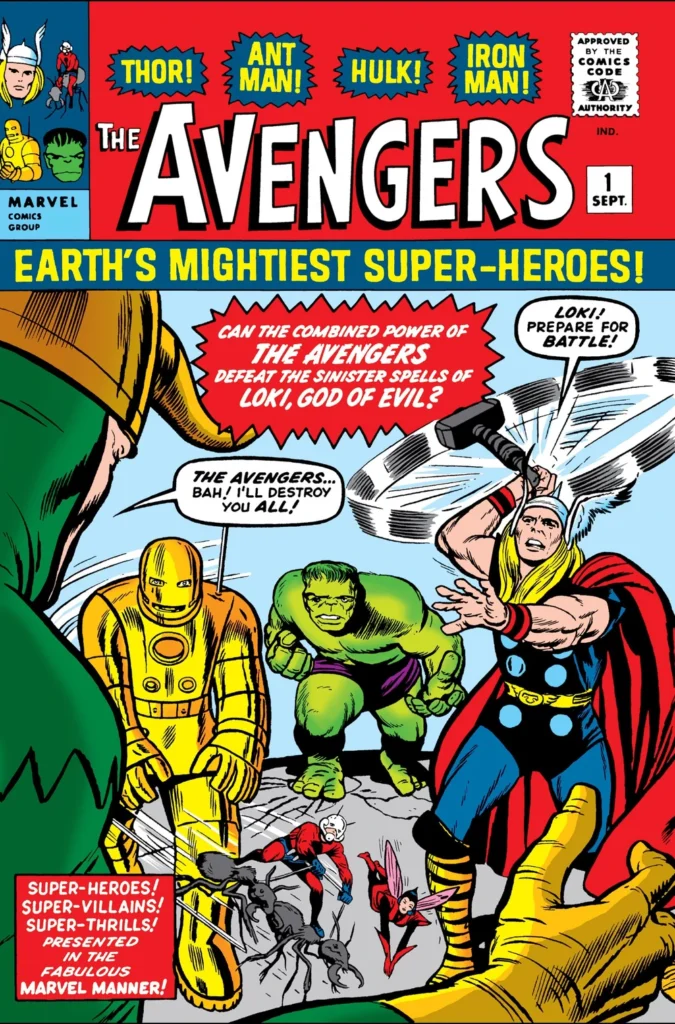
AVENGERS #1
When the mischievous Loki sets a dangerous scheme into motion, Earth's most powerful heroes are unknowingly drawn together for the first time. Iron Man, Thor, Hulk, Ant-Man, and the Wasp must overcome misunderstandings, clashing personalities, and overwhelming odds to stop a threat no single champion can defeat alone. As reluctant allies become an extraordinary team, a legendary partnership is forged that will forever shape the Marvel Universe. Created by Stan Lee and Jack Kirby, AVENGERS #1 delivers thrilling action, memorable character dynamics, and the historic debut of Earth's Mightiest Heroes, launching one of the most influential superhero teams in comic book history.
CREATORS
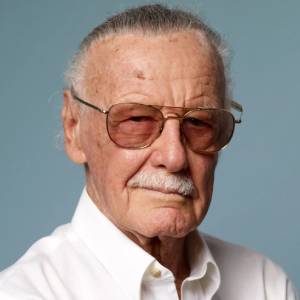
STAN LEE
WRITER/EDITOR

JACK KIRBY
PENCILLER

DICK AYERS
INKER

STAN GOLDBERG
COLORIST (UNCREDITED)
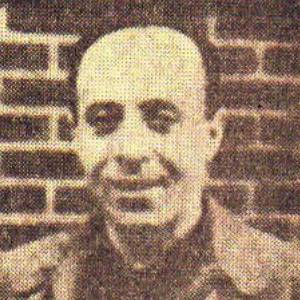
SAM ROSEN
LETTERER
CHARACTERS
MAIN CHARACTERS
IRON MAN
ANTHONY 'TONY' STARK
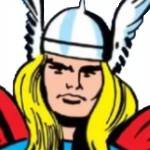
THOR
THOR ODINSON/DONALD BLAKE
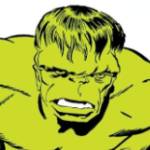
HULK
ROBERT BRUCE BANNER
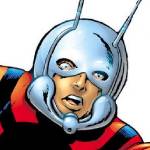
ANT-MAN
HENRY 'HANK' PYM
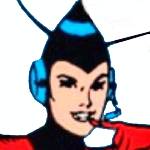
WASP
JANET VAN DYNE
ANTAGONIST
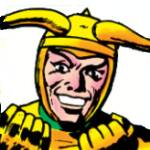
LOKI
LOKI LAUFEYSON
SUPPORTING CHARACTER
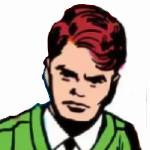
RICK JONES
RICHARD 'RICK' JONES
GUEST APPEARANCES
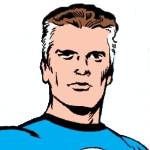
MISTER FANTASTIC
REED RICHARDS
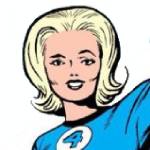
INVISIBLE GIRL
SUSAN 'SUE' STORM
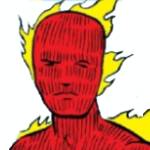
HUMAN TORCH
JONATHAN 'JOHNNY' STORM
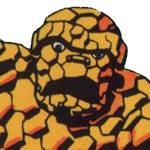
THING
BENJAMIN J. GRIMM
ANCILLARY CHARACTERS
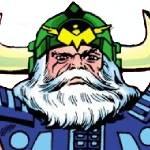
ODIN
ODIN BORSON
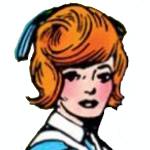
JANE FOSTER
JANE FOSTER
THE COMING OF THE AVENGERS!
In Asgard, the majestic realm of the Norse gods, Loki, the cunning God of Mischief and adopted brother of Thor, languishes in exile on the dreaded Isle of Silence. Banished by Odin for his countless schemes against Asgard and Earth, Loki burns with hatred toward the one he blames for his punishment: Thor, the mighty God of Thunder. Though physically imprisoned, Loki's vast magical abilities remain intact. Determined to secure revenge, he projects his consciousness across the cosmos, searching for a way to lure Thor away from Earth and back to Asgard where he can be destroyed once and for all.
Loki's astral form travels to Earth and spies upon Thor's mortal identity, Dr. Donald Blake. In a New York medical office, Blake calmly treats a young patient named Bobby and sends him away with encouragement. Loki scoffs at the sight of the mild-mannered physician. Defeating Blake would mean nothing; only conquering Thor would satisfy his thirst for vengeance. Realizing he needs a crisis powerful enough to force Blake to transform into Thor, Loki begins scanning Earth for the perfect catalyst.
After hours of searching, Loki discovers an ideal pawn: the Incredible Hulk. Roaming the American Southwest, the Hulk is feared by humanity despite possessing no true malice. Loki watches as the green behemoth bounds across the desert in enormous leaps. Seeing an opportunity, the trickster creates a mental illusion of dynamite on a railroad trestle directly in the Hulk's path. Believing the explosives are real and about to destroy the bridge, Hulk leaps to stop them. Since the dynamite is only an illusion, he misjudges his landing and accidentally smashes the trestle itself.
A speeding train approaches the damaged bridge. Horrified railroad workers realize they cannot stop in time. Loki celebrates, convinced the impending disaster will make Hulk Earth's most wanted criminal and force Thor into action. However, the Hulk unexpectedly acts as a hero. Grabbing a massive boulder, he uses it to support the broken structure and physically holds the damaged bridge together with his immense strength. The train safely passes overhead, but the conductors only see Hulk beneath the tracks and assume he caused the catastrophe. Once the train is safe, the bridge collapses entirely. Loki is delighted. Although Hulk saved everyone aboard, no one knows the truth.
News of the apparent attack spreads rapidly across the country. Newspapers report that the Hulk attempted to destroy a train, fueling public panic. One person refuses to believe the story: Rick Jones, the Hulk's closest friend. Convinced something is wrong, Rick gathers members of the Teen Brigade, a nationwide network of amateur radio enthusiasts. Knowing only the world's greatest heroes might be able to deal with the Hulk, Rick orders the group to contact the Fantastic Four immediately.
As the emergency transmission is broadcast, Loki intervenes. Fearing the Fantastic Four will solve the mystery before Thor becomes involved, he magically alters the radio signal and redirects it to a frequency he knows Donald Blake monitors. Sitting in his study, Blake overhears the desperate call. Realizing the situation must involve the Hulk, he slams his enchanted cane against the floor and transforms into the mighty Thor.
Unbeknownst to Loki, others intercept the message as well. Scientist Hank Pym and his partner Janet van Dyne spring into action as Ant-Man and the Wasp. Using Pym's ingenious transportation systems and flying ants, they begin a rapid journey toward the Southwest. Meanwhile, millionaire inventor Tony Stark dons his golden Iron Man armor and rockets into the sky, eager to investigate reports of the Hulk himself.
Back at Teen Brigade headquarters, Rick and his friends receive a delayed response from the Fantastic Four. Reed Richards explains that his team is occupied elsewhere but assures them that other heroes will likely answer the call. Moments later, those heroes arrive. Thor appears first, followed by Iron Man, Ant-Man, and the Wasp. The stunned teenagers can barely believe their eyes as four of the world's greatest champions gather under one roof.
Watching from Asgard, Loki grows frustrated. His plan was only meant to attract Thor, not an entire collection of superheroes. Thinking quickly, he creates another illusion—this time a vision of the Hulk running past Teen Brigade headquarters. Thor catches a glimpse of the phantom Hulk and immediately gives chase without informing the others.
The pursuit leads Thor away from Earth and toward Asgard. When his hammer passes harmlessly through the illusion, Thor realizes Loki is responsible. Determined to end his brother's interference, he travels across the Rainbow Bridge and seeks Odin's permission to confront the God of Mischief. Odin grants it but warns Thor that Loki remains his son as well and that he will not interfere in the outcome.
Thor journeys toward the Isle of Silence and encounters numerous magical traps prepared by Loki. Monstrous tangle roots emerge from the swamp to ensnare him. Thor barely escapes by spinning Mjolnir with hurricane force. Next, Loki causes a dormant volcano to erupt, releasing enchanted gas capable of weakening even immortal gods. Thor dives beneath the sea and swims through the danger before arriving at the island.
The brothers clash in a spectacular battle of strength and sorcery. Loki summons ancient trolls known as the Silent Ones, hoping they will drag Thor into underground mines for eternity. Thor blinds the creatures with a devastating lightning blast and frees himself. Loki then creates countless illusions of himself, but Thor uses Mjolnir's winds to expose the real trickster. When Loki attempts to throw himself from a cliff rather than be captured, Thor harnesses powerful magnetic currents and binds him to his enchanted hammer. At last, the defeated God of Mischief is taken prisoner.
While Thor battles Loki in Asgard, Iron Man, Ant-Man, and the Wasp continue searching for the Hulk. The green giant has taken refuge with a traveling circus, disguising himself as a giant robot performer named "Mechano." Hidden beneath clown makeup and costumes, Hulk performs impossible feats of strength while the public believes he is merely a machine.
Ant-Man's insect scouts eventually locate him. Acting quickly, Hank orders his ants to undermine the ground beneath the Hulk, causing a collapse that traps him temporarily. Hulk smashes free with ease, but the encounter confirms his identity. Ant-Man attempts to reason with him, offering help if he is innocent. Having been hunted and betrayed too many times, Hulk refuses to trust anyone.
Using a steel cylinder dropped by his ants, Ant-Man briefly captures Hulk, but the giant escapes. Furious, Hulk abandons his disguise and reveals himself before a terrified crowd. The Wasp tries distracting him but is nearly killed when Hulk blasts her with a bellows and captures her in his massive hand. Fortunately, Iron Man arrives just in time and forces Hulk to release her.
The battle escalates dramatically. Hulk tears through circus tents and safety nets while Iron Man pursues him across the countryside. Eventually, Hulk lands a devastating blow that damages Iron Man's armor, forcing the armored Avenger to make repairs while Hulk escapes once more.
The chase eventually leads to a massive automobile factory in Detroit. Iron Man confronts Hulk inside the complex, attempting one final time to reason with him. Hulk, exhausted from being pursued and misunderstood, lashes out. The two titans engage in a fierce battle that threatens to destroy the entire facility.
Before the conflict can reach its climax, Thor suddenly arrives carrying the captive Loki. He reveals the truth: Loki orchestrated the entire railroad incident and framed Hulk solely to lure Thor back to Asgard. Iron Man immediately understands that Hulk has been innocent all along.
Enraged, Hulk lunges toward Loki, eager for revenge. In desperation, Loki transforms himself into a radioactive form and threatens everyone nearby. Before he can escape, however, Ant-Man secretly directs an army of ants to activate a hidden trapdoor beneath the villain. Loki plunges into a massive lead-lined waste containment tank designed to hold radioactive materials. The ants seal the chamber shut, imprisoning the trickster god.
Thor assures the others that Loki's radioactive state will soon fade and that he will be returned to Asgard to face proper punishment. With the crisis finally over, the heroes reflect on what they have accomplished together. Ant-Man points out that each of them possesses unique abilities and that their combined strength proved far greater than any could achieve alone.
Iron Man enthusiastically agrees. Thor recognizes the potential for great good. Even Hulk admits that he would rather stand beside them than be hunted by them. The Wasp suggests they need a dramatic name worthy of such an alliance. After a brief discussion, the Wasp proposes a title that instantly resonates with everyone: The Avengers.
United by circumstance, forged through conflict, and strengthened by their differences, Iron Man, Thor, Hulk, Ant-Man, and the Wasp form a new team dedicated to protecting the world from threats no single hero could face alone. Thus begins the legend of the Avengers, one of the most powerful and influential superhero teams ever assembled.
REVIEW
Published in 1963, AVENGERS #1 is one of the most important milestone comics in Marvel history, bringing together several of the publisher's biggest heroes for the first time. Written by Stan Lee and illustrated by Jack Kirby, the issue introduces the unlikely alliance of Iron Man, Thor, Hulk, Ant-Man, and the Wasp as they unite to stop Loki's latest scheme. While the story is simple by modern standards, its significance lies in establishing the foundation for what would become Marvel's flagship superhero team.
Stan Lee's script excels at showcasing the distinct personalities of each hero. Rather than functioning as a perfectly coordinated unit from the outset, the team is filled with disagreements and conflicting egos—particularly the volatile Hulk, whose unpredictable behavior creates tension among the others. This emphasis on personality over perfection became a defining characteristic of Marvel's storytelling, making the heroes feel more relatable than the flawless champions often seen in earlier superhero comics.
Jack Kirby's artwork is equally instrumental in the issue's success. His bold compositions, dynamic action scenes, and expressive character work imbue every page with energy. Although Kirby was still refining the visual language that would define his later masterpieces, AVENGERS #1 already demonstrates his remarkable ability to portray larger-than-life heroes and explosive action. The iconic character designs and dramatic poses helped establish the visual identity of the Avengers for generations to come.
The pacing reflects the storytelling conventions of the Silver Age, moving rapidly from one plot point to the next while featuring extensive dialogue and exposition. Modern readers may find the narration and explanations overly wordy, but they also possess an undeniable charm that captures the optimism and imagination of early Marvel comics. The issue balances action, humor, and interpersonal conflict effectively, even if the central plot is relatively straightforward.
As both an entertaining adventure and a landmark publication, AVENGERS #1 remains an essential read for comic book fans. Its greatest strength is not the complexity of its story but the chemistry between its heroes and the historic debut of a team that would become one of the most influential franchises in popular culture. Though later stories would surpass it in scale and sophistication, this inaugural issue deserves recognition as the unforgettable beginning of Earth's Mightiest Heroes.
NOTES
AVENGERS #1 marks the introduction and origin of the Avengers, bringing together several of Marvel's already established superheroes into a single team. At the time, Iron Man appeared in TALES OF SUSPENSE, Thor headlined JOURNEY INTO MYSTERY, the Hulk had recently starred in the short-lived THE INCREDIBLE HULK, and Ant-Man and the Wasp were featured in TALES TO ASTONISH. Their historic union launched one of the most enduring and influential superhero teams in comic book history.
Following the success of DC Comics' JUSTICE LEAGUE OF AMERICA in 1960, Marvel publisher Martin Goodman recognized the growing popularity of superhero team books and encouraged Stan Lee to create a similar title for Marvel. Lee and artist Jack Kirby responded by assembling several of Marvel's already established heroes — Iron Man, Thor, Hulk, Ant-Man, and the Wasp — into a single team. The result was AVENGERS #1, a landmark comic that transformed Marvel's interconnected universe and launched one of the most influential superhero teams in comic book history.
An intriguing piece of Marvel history suggests that AVENGERS #1 came about because of an unexpected production delay on DAREDEVIL #1. According to Marvel executive Tom Brevoort, artist Bill Everett fell significantly behind schedule, leaving Marvel with a looming printing deadline and no completed comic. Rather than waste the reserved press time, Stan Lee quickly devised a new team book, and he and Jack Kirby rapidly developed the debut issue featuring Iron Man, Thor, Hulk, Ant-Man, and the Wasp. The hastily produced comic was completed in time for publication, and AVENGERS #1 debuted alongside X-MEN #1 in September 1963, launching one of Marvel's most enduring franchises.
The origins of the original AVENGERS comic book logo remain the subject of debate. THE OFFICIAL MARVEL INDEX TO THE AVENGERS credits letterer Sam Rosen with designing the logo, while acclaimed letterer and logo historian Todd Klein attributes the original design to Marvel production manager Sol Brodsky. As a result, the true creator of the iconic AVENGERS logo has never been definitively established.