
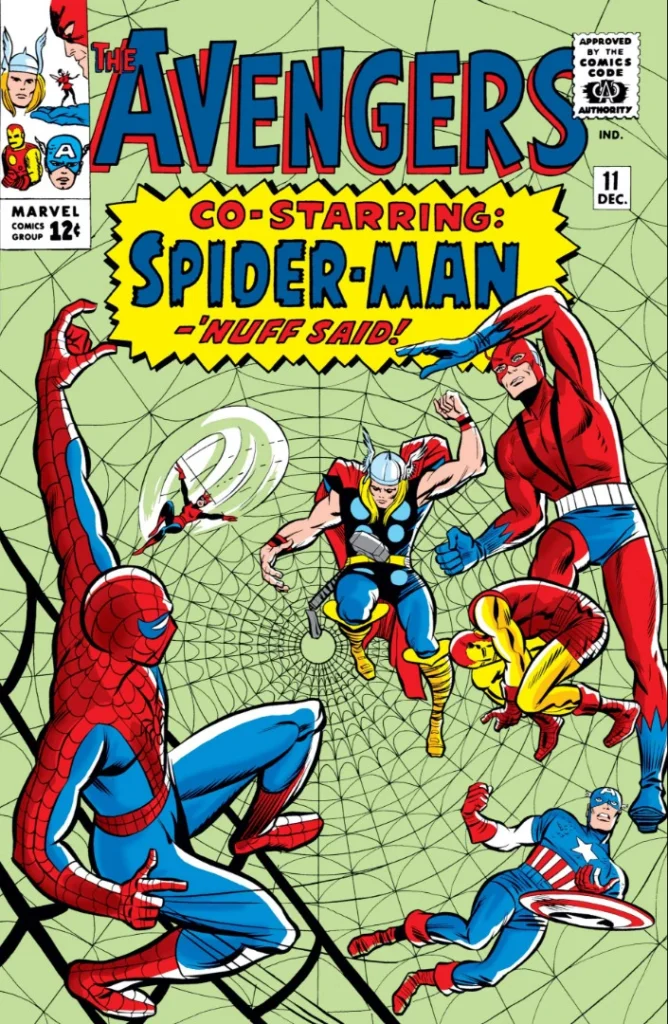
AVENGERS #11
With Iron Man missing and Tony Stark believed dead, the Avengers find themselves shorthanded just as an old enemy prepares his revenge. From the distant future, Kang the Conqueror creates a flawless robotic duplicate of Spider-Man to infiltrate and destroy Earth's Mightiest Heroes. Lured to a remote temple by the impostor's false promise of rescuing Iron Man, the Avengers fall into a series of deadly traps and face crushing defeat. But Kang's perfect plan begins to unravel when the real Spider-Man arrives to confront his mechanical double, leading to an unforgettable showdown that will determine the Avengers' fate.
CREATORS
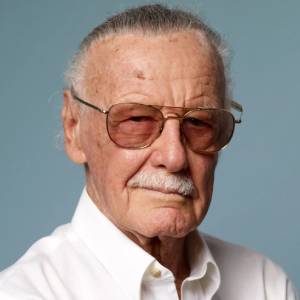
STAN LEE
WRITER/EDITOR
DON HECK
PENCILLER
CHIC STONE
INKER

STAN GOLDBERG
COLORIST (UNCREDITED)
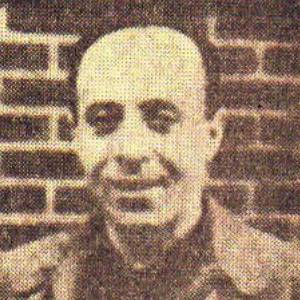
SAM ROSEN
LETTERER
CHARACTERS
MAIN CHARACTERS
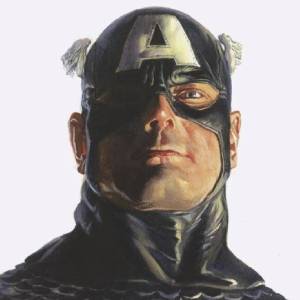
CAPTAIN AMERICA
STEVE ROGERS
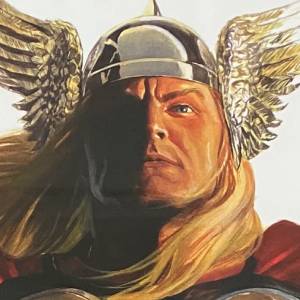
THOR
THOR ODINSON/DONALD BLAKE
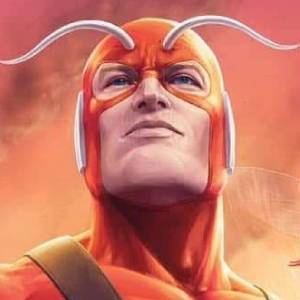
GIANT-MAN
HENRY 'HANK' PYM
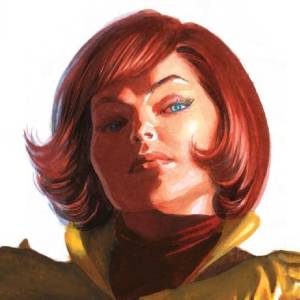
WASP
JANET VAN DYNE
GUEST STAR
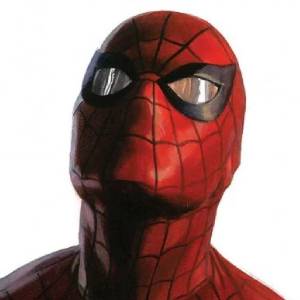
SPIDER-MAN
PETER PARKER
ANTAGONISTS
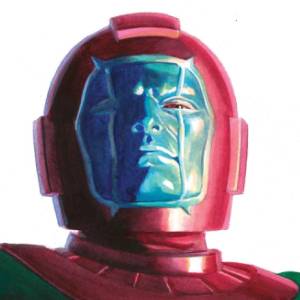
KANG THE CONQUEROR
NATHANIEL RICHARDS (EARTH-6311)
SUPPORTING CHARACTERS
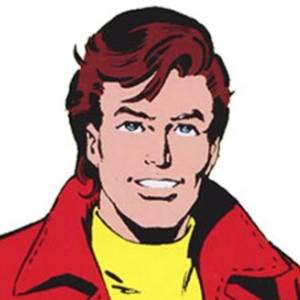
RICK JONES
RICHARD 'RICK' JONES
THE MIGHTY AVENGERS MEET SPIDER-MAN!
While conducting a delicate experiment in his laboratory, Giant-Man is interrupted by an emergency summons from Thor, the current chairman of the Avengers. Thor insists that Avengers business takes priority over everything else, prompting Giant-Man to jokingly question whether the team truly appreciates him. The Wasp playfully reassures him, and the pair report to Avengers Mansion for the meeting.
The Avengers discuss the shocking news that Tony Stark has reportedly died while Iron Man has mysteriously vanished. Giant-Man believes Iron Man is searching for Stark's killer, while Captain America proposes suspending team operations for twenty-four hours in Stark's memory. Giant-Man argues that Stark would have wanted the Avengers to remain active, instead suggesting Iron Man be granted a temporary leave of absence. The motion passes unanimously, although Rick Jones is reminded that, as an honorary member, he has no voting privileges. Before the meeting ends, Thor announces that Captain America will become the team's next rotating chairman.
Unknown to the Avengers, Kang the Conqueror has been watching the meeting from the year 3000. Seeing Iron Man's absence as the perfect opportunity, Kang decides to destroy the weakened team without confronting them personally. Learning from Baron Zemo's failed creation of Wonder Man, Kang concludes that only a completely obedient robot can carry out his plans. He studies Spider-Man's powers, personality, and fighting style before using his futuristic technology to create a flawless mechanical duplicate possessing all of Spider-Man's abilities. After programming the Spider-Android with its mission, Kang sends it back through time.
The Spider-Android first rescues Captain America from a gang of robot attackers, convincing Cap that he is the real Spider-Man. Claiming he wishes to join the Avengers, he accompanies Captain America back to headquarters. Although Thor explains that Avengers membership requires testing, the Wasp immediately distrusts the newcomer. The impostor then claims he knows where Iron Man has been taken, saying Baron Zemo, the Enchantress, and the Executioner abducted him and carried him to the Temple of Tirod in Mexico. Determined to rescue their missing teammate, the Avengers immediately head for Mexico.
Upon arriving at the temple, Giant-Man and the Wasp are the first to spring Kang's trap. The Spider-Android reveals his true intentions and attacks them inside the ancient ruins. Giant-Man repeatedly changes between giant-size and ant-size to confuse his opponent while the Wasp supports him with lightning-fast aerial attacks. Although Giant-Man notices something strange about Spider-Man's fighting style, the robot eventually traps him in elastic webbing and temporarily incapacitates the Wasp.
Thor soon enters the battle and finds himself outmaneuvered by the Spider-Android's speed and cunning. The robot taunts the Thunder God into reckless attacks before trapping him in webbing, forcing Thor to lose possession of Mjolnir. As the critical sixty seconds expire, Thor transforms back into the seemingly helpless Dr. Donald Blake, leaving the Avengers on the verge of defeat.
Captain America becomes the final Avenger to arrive and is immediately attacked by the impostor. Despite Cap's remarkable combat skills, the Spider-Android blinds him with webbing and sends him tumbling from a towering ledge. Watching from the future, Kang believes his plan has succeeded, but is puzzled when the robot unexpectedly saves Captain America instead of allowing him to fall to his death.
Before Kang can transport the defeated Avengers into the future, the real Spider-Man suddenly appears. His spider-sense had alerted him that someone was impersonating him, allowing him to secretly follow the robot and uncover Kang's plot. The two Spider-Men engage in an incredible battle, matching each other's powers and web-slinging abilities blow for blow. Realizing that strength alone cannot defeat an opponent with identical powers, Spider-Man relies on his scientific knowledge to locate the robot's hidden control stud, shutting it down permanently.
Thor soon regains Mjolnir, transforms back into his godly form, and frees his teammates. After Captain America explains that Spider-Man saved them all, Giant-Man correctly concludes that only Kang possessed the scientific genius to create such a perfect duplicate. Defeated once again, Kang retreats into the future, frustrated that even his most elaborate plan could not overcome Earth's Mightiest Heroes.
REVIEW
AVENGERS #11 is one of the most entertaining early issues of the series and a standout example of Marvel's growing interconnected universe. The story brings together two of the company's biggest attractions by having Spider-Man cross paths with Earth's Mightiest Heroes for the first time. Rather than simply presenting a straightforward team-up, the issue explores the tension between an inexperienced but determined young hero and a respected group of veteran superheroes. The result is a fun, character-driven adventure that captures much of what made early Marvel Comics unique.
The biggest strength of the issue is its character interaction, particularly the contrast between Spider-Man and the Avengers. Spider-Man's sarcastic humor and youthful confidence create an entertaining dynamic with the team's more serious personalities. Captain America treats Spider-Man with patience and fairness, Thor's noble seriousness clashes with Spider-Man's wisecracking attitude, and the Wasp provides a natural sense of skepticism toward the newcomer. The issue effectively demonstrates that what makes Marvel heroes interesting is not just their powers, but their personalities and differences. Spider-Man's desire to prove himself worthy of joining the Avengers also adds a relatable emotional element to the story.
The plot is a strong example of Silver Age superhero storytelling, combining mystery, action, and misunderstandings between heroes. Spider-Man's attempt to earn Avengers membership provides the foundation for the conflict, while the villain's scheme creates a reason for the heroes to work together. Although the story follows the familiar superhero formula of heroes initially fighting before discovering the truth, it uses that structure effectively. The pacing is quick and energetic, with enough time devoted to character moments while still delivering plenty of action and suspense.
The artwork captures the excitement of the crossover and gives each hero a distinct presence. Spider-Man's agility and movement are effectively portrayed, while the Avengers' different abilities are clearly showcased throughout the action sequences. The visual storytelling keeps the battles easy to follow and allows each character to shine. While the artwork may not reach the explosive level of Marvel's most iconic Silver Age issues, it successfully supports the story and enhances the sense of excitement surrounding Spider-Man's first encounter with the team.
Overall, AVENGERS #11 is a memorable and important early Marvel story that succeeds because of its strong characters and entertaining crossover premise. While it does not permanently change the Avengers' status quo or introduce a major new character, its importance lies in strengthening Marvel's shared universe and proving that heroes from different series could interact naturally. Spider-Man's first meeting with the Avengers remains the highlight, making this issue a fan-favorite chapter in both Avengers and Marvel history.
NOTES
Iron Man appears on the cover of this issue but does not appear in the actual story. His absence is explained in Tales of Suspense #61 (1965), where Tony Stark fakes the death of his civilian identity after struggling to maintain the demanding dual life of being both a wealthy industrialist and the armored hero Iron Man.
This issue includes a Marvel Masterworks pin-up of Kang by illustrated Don Heck and colored by Stan Goldberg.
While Jack Kirby and Chic Stone are credited with illustrating the cover of this issue, it is believed that Steve Ditko contributed alterations to the artwork. Ditko may have provided rough pencils for the Spider-Man figure or revised Kirby’s original design to better match Spider-Man’s established appearance. He is also believed to have made additional adjustments to the Giant-Man figure, helping refine the characters’ appearances on the final cover.
This issue marks the first time Spider-Man has officially met the Avengers as a complete team. However, he had already encountered each member individually in previous adventures. His most recent encounters with the various Avengers occurred in Amazing Spider-Man Annual #1 (1964), where Spider-Man crossed paths with several members of the team before this historic meeting with the entire group.
Presumably, Kang's lack of knowledge regarding Immortus' battle with the Avengers in AVENGERS #10 (1964) can be explained by the time paradox that occurred at the conclusion of that story. Because the events of the battle were effectively erased from history, Kang would have no record or memory of the encounter ever taking place. The only individuals aware that the battle occurred are Zemo, the Executioner, and the Enchantress, who were present during the events and remained unaffected by the timeline reset.
The villains that Kang considers replicating in order to create an army capable of defeating the Avengers are, from left to right: Radioactive Man, the Unicorn, Mysterio, Magneto, and Doctor Doom. These powerful adversaries represent some of the most dangerous foes the Avengers and other Marvel heroes had faced, but Kang ultimately decides that creating multiple duplicates would be too risky, as the villains might turn against one another. Instead, he chooses to create a single, perfectly obedient duplicate of Spider-Man to carry out his plan.
This cover has been homaged twice: first by Aleksi Briclot with his painted cover for NEW AVENGERS #41 (2008), and later by Paul Renaud with his variant cover for AMAZING SPIDER-MAN #17 (2015). Both artworks pay tribute to the iconic composition of the original AVENGERS #17 (1964) cover.