
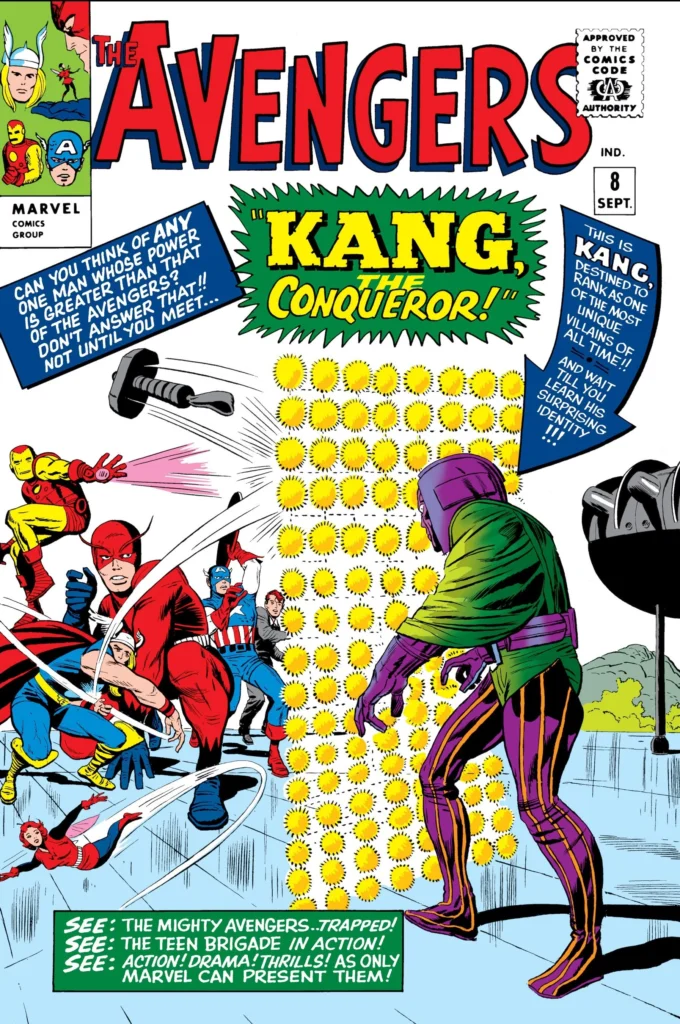
AVENGERS #8
The Avengers face one of their most dangerous challenges when a mysterious figure from the future arrives with an unstoppable plan for conquest. Calling himself Kang the Conqueror, the time-traveling warlord wields technology centuries beyond mankind’s understanding, defeating the Avengers and imprisoning them aboard his futuristic spacecraft. With the fate of Earth hanging in the balance, Captain America, Thor, Iron Man, Giant-Man, and the Wasp must rely on teamwork, courage, and unexpected help from Rick Jones and the Teen Brigade to defeat a villain who believes himself invincible.
CREATORS
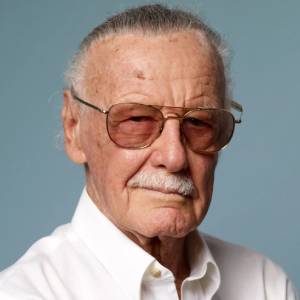
STAN LEE
WRITER/EDITOR
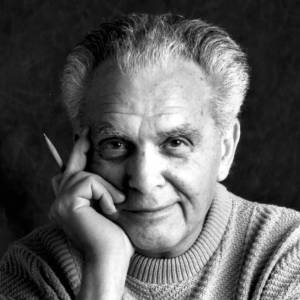
JACK KIRBY
PENCILLER

DICK AYERS
INKER
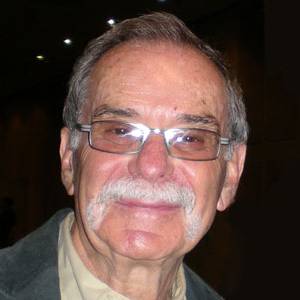
STAN GOLDBERG
COLORIST (UNCREDITED)
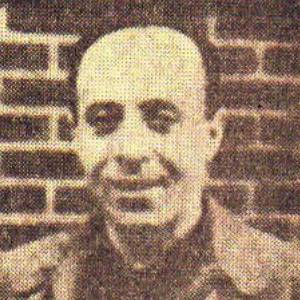
SAM ROSEN
LETTERER
CHARACTERS
MAIN CHARACTERS
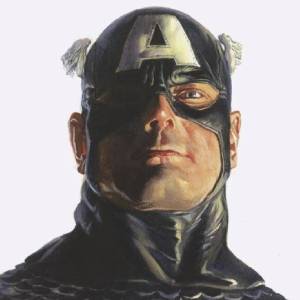
CAPTAIN AMERICA
STEVE ROGERS
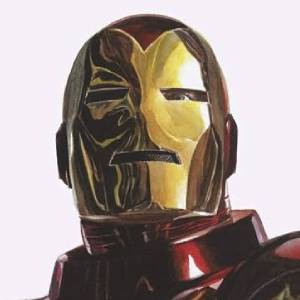
IRON MAN
ANTHONY 'TONY' STARK
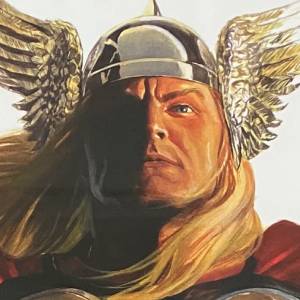
THOR
THOR ODINSON/DONALD BLAKE
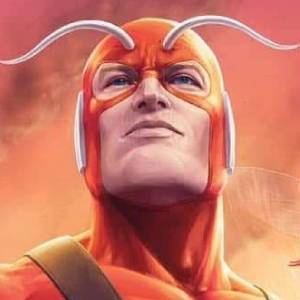
GIANT-MAN
HENRY 'HANK' PYM
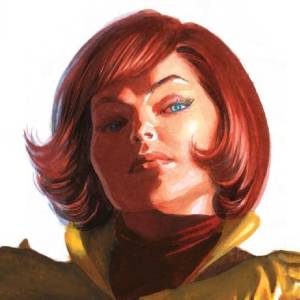
WASP
JANET VAN DYNE
ANTAGONIST
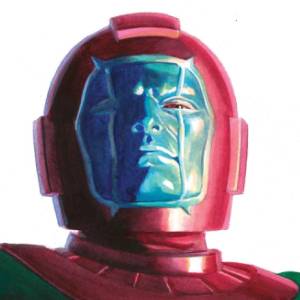
KANG THE CONQUEROR
NATHANIEL RICHARDS (EARTH-6311)
SUPPORTING CHARACTER
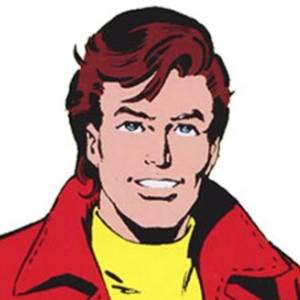
RICK JONES
RICHARD 'RICK' JONES
ANCILLARY CHARACTER
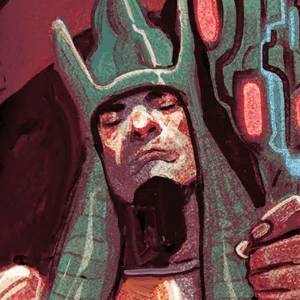
RAMA-TUT
NATHANIEL RICHARDS (EARTH-6311)
KANG, THE CONQUEROR!
The Avengers are called into action when a top-priority emergency summons from the Pentagon brings the entire team together for an urgent meeting. As police hold back a crowd of excited onlookers outside Anthony Stark’s mansion, Captain America, Thor, Iron Man, Giant-Man, and the Wasp arrive to learn the reason behind the government’s desperate request. Although the Avengers continue to operate without a permanent leader, they maintain their democratic tradition of rotating chairmanship, with Captain America presiding over this particular meeting.
Inside the Avengers’ headquarters, the team establishes a secure communication link with the Pentagon using their closed-circuit television system. After ensuring that their transmission cannot be intercepted, they receive a disturbing briefing from a military general. The government has encountered an unprecedented threat: a massive unidentified spacecraft has landed in a remote wooded area in Virginia. Before touching down, the mysterious vessel emitted a powerful energy beam that transformed the surrounding forest into a perfectly smooth landing area nearly a mile wide.
The Avengers watch recorded footage of the event as heavily armed military forces surround the ship. Despite deploying tanks and advanced weaponry, the soldiers are completely helpless against the alien technology. A strange vibration ray emerges from the spacecraft and causes each military vehicle to shake violently until the crews are forced to abandon them. The mysterious visitor then opens the vessel and calmly emerges, displaying complete confidence despite being surrounded by Earth’s strongest defenses.
The stranger identifies himself as Kang, the Conqueror, and immediately demands that the leaders of Earth come before him. He dismisses the soldiers as insignificant and declares that he will only negotiate with those who rule the planet. Recognizing that the threat is beyond ordinary military capability, the Pentagon contacts the Avengers, who agree to investigate immediately. Within the hour, the team boards a specially assigned aircraft and travels to Virginia to confront the mysterious invader.
When the Avengers arrive, they find Kang sitting in a futuristic anti-gravity chair outside his enormous spacecraft. The villain shows no fear when confronted by Earth’s Mightiest Heroes, confidently declaring that he has come to conquer the planet. Iron Man demands that Kang explain himself, but the time-traveling conqueror simply announces that Earth now belongs to him and that the Avengers will soon learn how powerless they truly are.
Kang activates a powerful anti-gravity device that lifts the Avengers helplessly into the air. Even their combined strength proves ineffective against his advanced technology. Iron Man attempts to use his repulsor rays to weaken the force field surrounding them, but Kang’s equipment counters the attack. When Thor attempts to strike Kang with his enchanted hammer, the villain uses a futuristic device to send the weapon temporarily into another dimension before it can hit him.
Although the Avengers struggle against the overwhelming technology of the future, Kang’s anti-gravity field suddenly reverses, sending them crashing toward the ground at tremendous speed. Captain America quickly instructs the team to relax their bodies and absorb the impact, allowing them to survive the fall with only minor injuries. As they recover, government officials arrive and attempt to take control of the situation, but Thor warns them that Kang possesses abilities unlike anything humanity has ever encountered.
Kang then reveals the astonishing story behind his identity. He explains that he was born thousands of years in Earth’s future, in the year 3000, where he mastered the science of time travel. Using his knowledge, he traveled into Earth’s past and became the ruler known as Pharaoh Rama-Tut. During his journeys through history, he encountered Doctor Doom before continuing his travels through time. While attempting to return to his own era, a malfunction caused him to overshoot his destination and arrive in the distant year 4000.
In this future age, Earth has become a savage and war-torn world where civilizations fight with forgotten weapons far beyond their understanding. Kang uses his intelligence and access to advanced technology to dominate the primitive societies of that era, creating an empire for himself. However, he finds ruling a dying world meaningless and decides to travel backward to an earlier period when Earth is prosperous and full of resources. With the weapons and scientific knowledge of the future at his command, Kang declares that he will become the undisputed ruler of the 20th century.
The Avengers refuse to accept Kang’s claim. Giant-Man attempts to physically restrain him, but Kang’s advanced armor releases a powerful electrical force that forces the hero away. Iron Man realizes that Kang’s suit contains incredible technological defenses, while Captain America warns the team to be prepared for anything. Thor then attacks again, smashing through Kang’s defenses with his enchanted hammer. Kang counters with an anti-matter shield designed to destroy anything it touches, but Thor’s mystical weapon proves immune because it is not a creation of Earth.
While Kang focuses on battling the stronger Avengers, the Wasp attempts to secretly infiltrate his armor and disable his technology. Shrinking down to microscopic size, she lands on Kang’s helmet and searches for a way to deactivate his systems. However, Kang’s futuristic machinery is unlike anything she has encountered, and her attempt accidentally triggers an alarm. Kang discovers the tiny hero and captures her between his fingers.
Realizing Wasp is in danger, Giant-Man uses his cybernetic abilities to force her back to normal size. The sudden transformation surprises Kang long enough for Captain America and Iron Man to intervene. Captain America’s shield strikes Kang while Iron Man rescues the Wasp, and the Avengers launch a coordinated attack. However, Kang activates another device, causing his spacecraft to capture the entire team with a powerful attraction beam.
The Avengers are pulled inside Kang’s ship and separated into individual chambers. Each hero faces a unique form of imprisonment created by Kang’s advanced technology. Thor discovers that the ship’s energy field has disrupted his ability to transform, leaving him trapped as Dr. Donald Blake and unable to summon his hammer. Giant-Man is reduced to normal size and rendered immobile. Iron Man struggles as the paralysis ray interferes with his injured heart and weakens the life-support system within his armor. Captain America is trapped beneath the weight of his own shield, unable to move.
Outside the ship, Kang gives Earth’s leaders a terrifying ultimatum: surrender the planet within 24 hours or face destruction. He boasts that his spacecraft alone possesses enough power to destroy the moon and warns humanity that resistance is pointless. Meanwhile, as governments around the world panic, the United Nations puts aside political differences and begins discussing a united response against the threat.
With the Avengers imprisoned, the only hope comes from the Wasp and Rick Jones, who escaped capture. Realizing they cannot defeat Kang through strength alone, they develop a plan to rescue their friends. The Wasp decides to return to Avengers headquarters to search for equipment that might help defeat Kang, while Rick contacts his old allies in the Teen Brigade to assist with a rescue mission.
Rick and the Teen Brigade sneak toward Kang’s ship, knowing they cannot fight him directly. Instead, they use deception, pretending that they want to join Kang’s forces. Believing the young heroes are surrendering, Kang allows them aboard his ship and orders them to retrieve equipment for him. The Teen Brigade uses the opportunity to sabotage his plans, deliberately damaging one of his devices to distract him while Rick searches for the imprisoned Avengers.
Rick eventually discovers the chambers holding the team and frees them by shutting down Kang’s paralysis system. Thor is the first to escape, transforming back into the Mighty Thor and immediately beginning the search for his teammates. Soon, the rest of the Avengers are freed, though Iron Man remains weakened because of the strain placed on his damaged heart.
As Kang prepares to complete his conquest, the Avengers regroup and launch another attack. However, the villain’s force field proves nearly impossible to penetrate. Even Thor’s hammer cannot break through his defenses. Just as it appears that Kang is unstoppable, the Wasp returns with a special device from Giant-Man’s laboratory. The weapon contains a powerful chemical solvent designed to weaken materials and electrical systems.
Working together, the Avengers create a plan. Thor repeatedly strikes Kang’s force field, distracting him and forcing his defenses to weaken momentarily. Giant-Man fires the solvent capsule through the opening, causing Kang’s armor and technological equipment to deteriorate. Without his advanced weapons, Kang’s greatest advantage is destroyed.
Kang refuses to admit defeat and activates one final weapon: a radiation-based attack designed to kill the Avengers. Captain America shields himself and the Teen Brigade with his powerful shield, but Thor realizes he can counter the attack. Using his enchanted hammer, Thor absorbs the radiation and reflects it back toward Kang. The energy overwhelms the conqueror’s own defenses, forcing him to retreat before he is destroyed.
Kang escapes by returning to his time machine and fleeing into the timestream. Although the Avengers are unable to capture him, Captain America recognizes that they have achieved an important victory. Kang now knows that even with the technology of the future, he can be defeated by courage, teamwork, and determination. The Avengers stand ready, knowing that if Kang ever returns, they will be waiting to defend Earth once again.
REVIEW
AVENGERS #8 marks one of the most important turning points in the early history of Earth’s Mightiest Heroes with the introduction of Kang the Conqueror, a villain whose impact would extend far beyond his first appearance. Written by Stan Lee with artwork by Jack Kirby, the issue expands the scope of the Avengers from battling present-day supervillains to confronting threats from the distant future. While the story maintains the energetic, imaginative style of early Marvel Comics, it introduces concepts of time travel, futuristic technology, and temporal conquest that would become major elements of Marvel storytelling for decades.
The issue’s greatest strength is the debut of Kang, who immediately stands apart from many of the Avengers’ previous opponents. Rather than being another criminal mastermind or super-powered menace, Kang is a conqueror from the future who possesses knowledge and technology far beyond the modern era. His confidence, ambition, and advanced weaponry make him a compelling threat, and Stan Lee successfully presents him as a villain who can challenge the Avengers through intelligence and strategy rather than sheer physical power. Although Kang’s origins are only briefly explored, the mystery surrounding him adds to his appeal and leaves the door open for future stories.
Jack Kirby’s artwork brings tremendous energy and imagination to the issue. His dynamic layouts, powerful action sequences, and futuristic designs give Kang’s arrival the sense of scale and importance it deserves. Kirby’s depiction of advanced machinery, futuristic armor, and the Avengers in combat creates a visually exciting adventure that feels larger than previous issues. His ability to make science-fiction concepts appear both strange and believable helps establish Kang as a unique addition to the Marvel Universe. The artwork perfectly complements Lee’s ambitious storytelling and elevates the issue’s sense of wonder.
The character interactions and dialogue continue to reflect the strengths of the early Avengers series. Captain America’s leadership, Thor’s noble confidence, Iron Man’s scientific brilliance, and Giant-Man and the Wasp’s personalities all contribute to the team dynamic. The issue also reinforces the idea that the Avengers are stronger together, as each member’s abilities become necessary when facing a threat unlike anything they have encountered before. While some dialogue contains the exaggerated narration and dramatic phrasing typical of the Silver Age, it adds to the charm and excitement of the story.
Overall, AVENGERS #8 is a landmark issue that succeeds because of its creativity, imagination, and long-term influence. Although the plot is relatively straightforward by modern standards, the introduction of Kang the Conqueror elevates the story into something historically significant. Stan Lee and Jack Kirby deliver a classic Silver Age adventure that expands the Avengers’ mythology and establishes the team as heroes capable of facing threats across time itself. With its memorable villain, groundbreaking concepts, and lasting impact, AVENGERS #8 remains one of the most important early issues in the series and a cornerstone of Marvel Comics history.
NOTES
Although this issue marks Kang the Conqueror’s first appearance under that identity, the character reveals that he has a much longer history as a time-traveling conqueror. Kang explains that he was originally known as Rama-Tut, a ruler from the year 3000 who traveled back in time and established himself as the pharaoh of ancient Egypt. During his time as Rama-Tut, he encountered and battled the Fantastic Four before fleeing into the present era in FANTASTIC FOUR #19 (1963). Later, in FANTASTIC FOUR ANNUAL #2 (1964), Rama-Tut encountered Doctor Doom, an event that inspired him to adopt a new identity modeled after Doom’s imposing image: Kang the Conqueror.
Following his defeat in this issue, Kang would return in AVENGERS #11, continuing his role as one of the team’s greatest adversaries. However, before Kang’s next appearance, his future counterpart Immortus would confront the Avengers in AVENGERS #10, further expanding the character’s complex connection to time travel and alternate identities. Over the years, Kang has become one of the Avengers’ most significant and enduring enemies, as well as a major threat throughout the entire Marvel Universe. His mastery of time travel, advanced technology, and countless variations across different eras have allowed him to remain a recurring and formidable presence in Marvel Comics.
This issue marks Jack Kirby’s final installment as the regular interior artist on AVENGERS, with Don Heck taking over the artwork for several issues. Although Kirby’s time as the series’ primary illustrator came to an end, he remained closely associated with the title by continuing to provide many of the cover illustrations for AVENGERS through issue #30. Kirby’s early artwork helped establish the visual identity of the series, defining the dynamic action, larger-than-life character designs, and dramatic storytelling style that became a hallmark of the Avengers during its formative years.
There is some uncertainty regarding the credited cover inker for this issue. While several sources attribute the cover inks to Dick Ayers, the OFFICIAL MARVEL INDEX TO THE AVENGERS lists Vince Colletta as the cover inker. As a result, the exact credit remains disputed among reference materials, with different sources providing conflicting information about who completed the final ink work on the cover.
The issue contains a minor error in which the Teen Brigade is incorrectly identified as being led by “Rick Brown” instead of Rick Jones, the character’s correct name.