
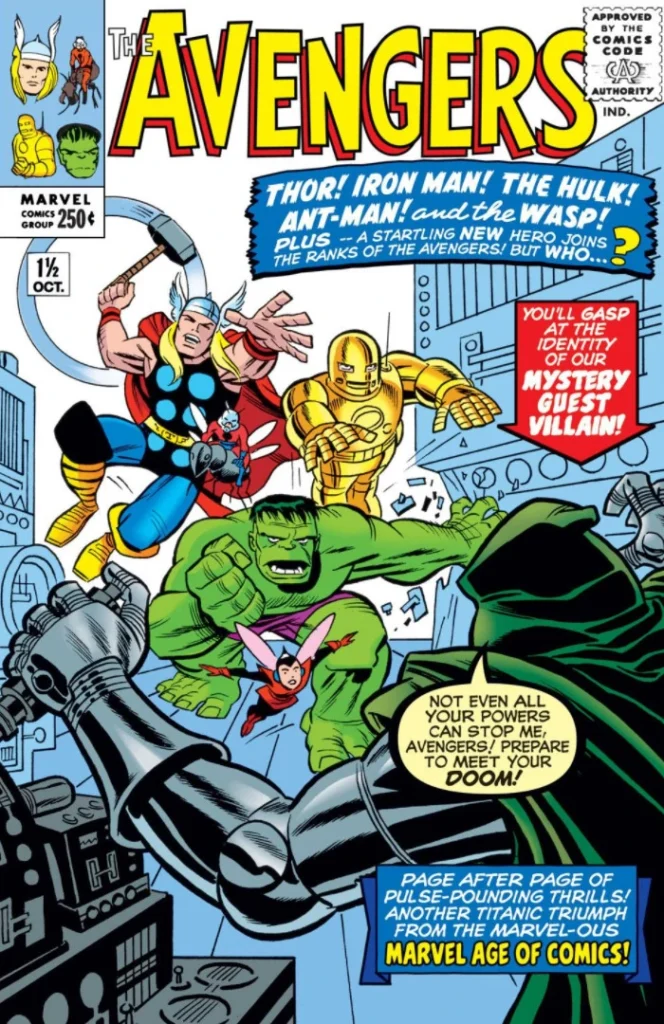
AVENGERS #1 ½
A forgotten chapter from the Avengers' earliest days is revealed as Earth's Mightiest Heroes face one of their most formidable challenges yet. When Doctor Doom unleashes a dangerous scheme, Iron Man, Thor, Hulk, Ant-Man, and the Wasp must put aside their differences to stop a threat that pushes their newly formed team to its limits. The Avengers embark on an action-packed adventure filled with unexpected alliances, clever strategies, and heroic clashes. Roger Stern and Bruce Timm recreate the magic of classic Marvel storytelling with a thrilling tale that feels like a true lost issue from the Silver Age.
CREATORS

ROGER STERN
WRITER/EDITOR

BRUCE TIMM
PENCILLER/INKER/COLORIST

COMICRAFT
LETTERER

TOM BREVOORT
EDITOR
CHARACTERS
MAIN CHARACTERS
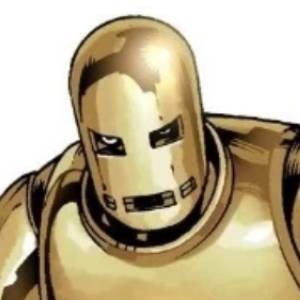
IRON MAN
ANTHONY 'TONY' STARK
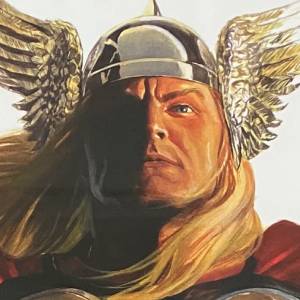
THOR
THOR ODINSON/DONALD BLAKE
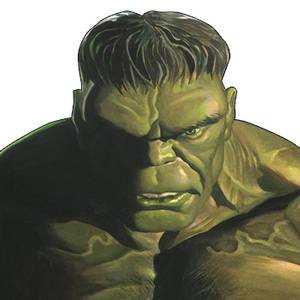
HULK
ROBERT BRUCE BANNER
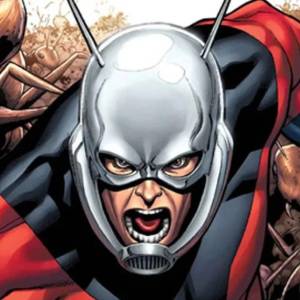
ANT-MAN
HENRY 'HANK' PYM
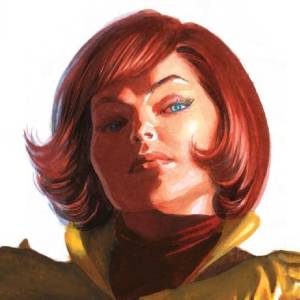
WASP
JANET VAN DYNE
ANTAGONIST
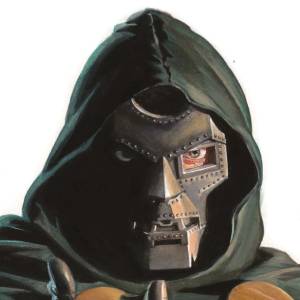
DOCTOR DOOM
VICTOR VON DOOM
SUPPORTING CHARACTERS
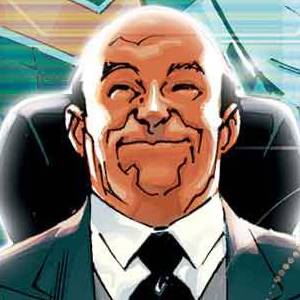
EDWIN JARVIS
EDWIN JARVIS
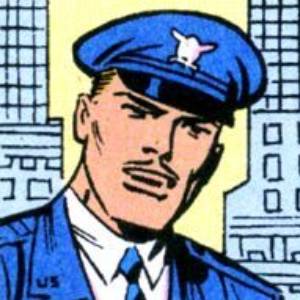
MAJOR BOWMAN
BOWMAN (FIRST NAME UNREVEALED)
GUEST APPEARANCES
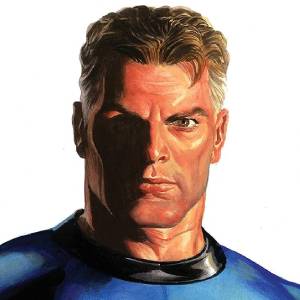
MISTER FANTASTIC
REED RICHARDS

INVISIBLE GIRL
SUSAN 'SUE' STORM
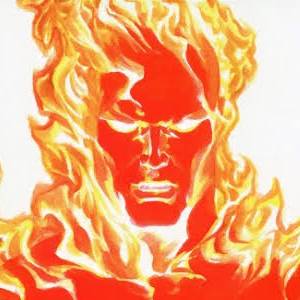
HUMAN TORCH
JONATHAN 'JOHNNY' STORM
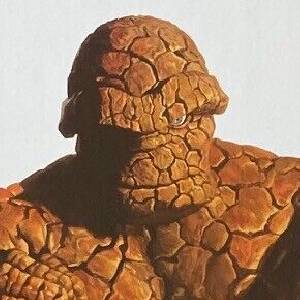
THING
BENJAMIN J. GRIMM
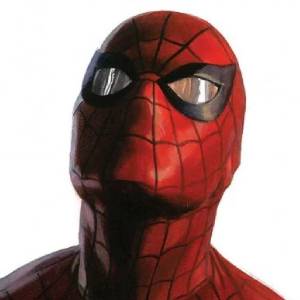
SPIDER-MAN
PETER PARKER
THE DEATH-TRAP OF DOCTOR DOOM!
Following the public announcement of the Avengers' formation, the world reacts with fascination and uncertainty. A televised news report reveals that Ant-Man, the Wasp, Iron Man, the Hulk, and Thor have formally established themselves as a team dedicated to protecting Earth from threats beyond the capabilities of conventional authorities. Citizens across the country discuss the unprecedented alliance, with some celebrating the gathering of such powerful heroes while others express concern over the inclusion of the unpredictable Hulk. Even the Fantastic Four take notice from their headquarters in the Baxter Building. Reed Richards welcomes the Avengers as potential allies, though Ben Grimm remains skeptical of the Hulk's sudden acceptance as a hero. Elsewhere in New York, Spider-Man hears the news and briefly wonders whether the newly formed team might have been a better fit for him than the Fantastic Four.
Not everyone is pleased by the emergence of another superhero team. Hidden within his secret stronghold, the brilliant and tyrannical Doctor Doom watches the announcement with growing anger. Having already crossed paths with numerous heroes, including the Fantastic Four, Ant-Man, and Spider-Man, Doom views the Avengers as another obstacle to his ambitions of conquest. Determined to eliminate them before they become a serious threat, he begins formulating a plan designed specifically to exploit the weaknesses of a team that has barely begun working together.
Thirty-six hours later, the Avengers gather at Tony Stark's luxurious Manhattan mansion, which has been designated as their headquarters. The heroes attempt to settle into their new arrangement, but tensions are already evident. Thor and Hulk exchange insults, the Wasp openly pines for Iron Man’s benefactor Tony Stark, and Ant-Man tries unsuccessfully to maintain order. Their meeting is interrupted by Major Bowman of the National Security Council, who arrives bearing urgent information about Doctor Doom. Bowman explains that Doom's criminal history includes numerous acts of international terrorism and recounts how the villain's massive Flying Fortress was seized and impounded after a previous confrontation with the Fantastic Four.
As Bowman briefs the team, alarming news arrives. Doom's supposedly abandoned Flying Fortress has somehow reactivated itself and escaped from military custody. Convinced that Doom is involved, the Avengers immediately mobilize. A high-performance military jet-copter is dispatched to transport them toward the gigantic vessel, which is now flying over the Atlantic Ocean. During the pursuit, the heroes finally witness the fortress for themselves. Stretching nearly a thousand feet in length, the massive airborne structure dwarfs anything they have ever encountered. Before they can formulate a plan, an invisible tractor beam locks onto their aircraft and drags them directly toward the fortress.
Once aboard, the Avengers split up to search for Doom. This proves to be exactly what the villain intended. The Hulk stumbles into a frictionless chamber lined with Teflon-like surfaces and powerful air jets that leave him helplessly spinning. Thor is assaulted by swarms of advanced energy spheres designed to overwhelm even his godly strength. Iron Man encounters what appears to be Doctor Doom, only to discover too late that it is a trap involving a robot that drains the energy from his armor. Ant-Man finds Major Bowman apparently imprisoned within the fortress, but strange inconsistencies soon begin to emerge.
The truth is finally revealed when Doom appears on a series of video screens. The Major who brought the Avengers together was actually Doctor Doom in disguise. The real Bowman had been captured hours earlier. By impersonating the government official, Doom successfully lured the entire team into his fortress and separated them. Gloating over his success, Doom explains that he has defeated each Avenger individually through the ancient strategy of divide and conquer. He boasts that the world will soon witness the destruction of its newest heroes before he turns his attention toward conquering the Fantastic Four and eventually the entire planet.
However, Doom underestimates the adaptability of his enemies. Trapped in a sealed chamber filling with gas, Ant-Man unveils a new identity. Using an enhanced growth formula, he transforms into the towering Giant-Man. His increased size allows him to break free from the trap and rescue the real Major Bowman. Giant-Man quickly begins locating his teammates. He frees the Hulk from his spinning prison, while Thor discovers that Mjolnir's mystical powers allow him to escape Doom's dimensional energy spheres. Together, they locate the nearly powerless Iron Man and destroy the robot draining his life-supporting energy. Thor then channels lightning directly into Iron Man's armor, restoring his strength.
The reunited Avengers launch a coordinated assault on Doom's command center. There they discover the Wasp imprisoned inside a transparent containment globe. Thor smashes her prison with his hammer, and the team finally confronts Doom directly. Although Doom's advanced force fields allow him to briefly hold his own against the heroes, he ultimately retreats through a hidden escape route. The Hulk pursues him and seemingly catches him, only to tear apart what turns out to be another Doombot. The real Doctor Doom has already vanished, leaving the heroes to deal with one final crisis.
Realizing his plan has failed, Doom activates the fortress's self-destruct sequence. The gigantic vessel begins to tear itself apart as explosions ripple through its interior. With only moments remaining, the Avengers desperately search for a way out. An argument erupts over a small escape pod capable of carrying only a single passenger. Refusing to waste time, Hulk throws Major Bowman into the pod and launches him to safety. Working together, the Avengers create their own escape route by smashing through the fortress's hull. Thor carries the shrunken Ant-Man and Wasp while the others leap clear of the doomed craft. Seconds later, Doctor Doom's magnificent Flying Fortress erupts into a massive fireball and crashes into the Atlantic Ocean.
Safely ashore, the Avengers reflect on their victory. They realize that Doom nearly defeated them because they were inexperienced as a team and too easily separated. Nevertheless, by combining their unique strengths, they overcame every obstacle he placed before them. Giant-Man credits the Wasp for secretly helping coordinate the rescue effort, while the others acknowledge the contributions of every member. Though frustrated that Doctor Doom escaped yet again, the heroes recognize that they have passed their first true test as a team. Unknown to them, the real Doom watches from afar. Despite losing his fortress, he has gained something valuable: a measure of respect for the Avengers. As he plots future schemes, the world's newest super-team emerges stronger, more united, and more determined than ever before.
REVIEW
AVENGERS #1½ is a delightful love letter to Marvel's Silver Age, seamlessly inserting a previously untold adventure between AVENGERS #1 and AVENGERS #2. Written by Roger Stern and illustrated by Bruce Timm, the one-shot captures the spirit of Stan Lee and Jack Kirby's earliest Avengers stories while benefiting from decades of storytelling refinement. Rather than feeling like a nostalgic gimmick, the comic succeeds as a genuine chapter in the team's formative years, offering longtime fans an adventure that feels as though it could have been published alongside the original issues.
Roger Stern's writing is the book's greatest strength. His script faithfully recreates the voices and personalities of the founding Avengers without merely imitating Stan Lee's style. Iron Man's confidence, Thor's nobility, Hulk's volatility, Ant-Man's scientific curiosity, and the Wasp's wit all feel authentic, while the dialogue is sharper and less exposition-heavy than a typical 1960s comic. Stern also skillfully integrates Spider-Man, the Fantastic Four, and Doctor Doom into the story, creating a crossover that enriches Marvel's early continuity without contradicting established history.
Bruce Timm's artwork provides the perfect visual complement to Stern's script. Rather than attempting to replicate Jack Kirby's dynamic style, Timm embraces his own clean, expressive aesthetic while preserving the optimism and energy of Silver Age Marvel. His storytelling is exceptionally clear, his character acting is full of personality, and the action scenes are exciting without becoming cluttered. Every page radiates a sense of fun, making the comic accessible to new readers while rewarding longtime Marvel fans with subtle visual nods to the era.
The pacing is brisk and consistently engaging, balancing superhero action, humor, and character interactions with remarkable efficiency. Although the story is intentionally smaller in scale than many modern Avengers adventures, it never feels insignificant. Doctor Doom serves as a formidable antagonist, and the interplay between the Avengers and Marvel's other iconic heroes provides much of the issue's charm. The comic's greatest accomplishment is its ability to feel both comfortably familiar and refreshingly original, proving that a continuity-driven story can still offer genuine surprises.
Even years after its release, AVENGERS #1½ remains one of Marvel's finest retro-continuity stories. Roger Stern and Bruce Timm crafted far more than a nostalgic tribute—they produced a compelling adventure that honors the legacy of the original Avengers while standing on its own merits. For readers who appreciate classic Marvel storytelling, this one-shot is an essential companion to the earliest Avengers comics and a shining example of how to revisit comic book history with creativity, respect, and enthusiasm.
NOTES
Celebrating Marvel's Silver Age history, AVENGERS #1½ provided fans with an authentic-feeling Silver Age Avengers adventure decades after the original era had ended. Roger Stern and Bruce Timm succeeded by creating a comic that was not simply a tribute to the past, but a convincing recreation of the storytelling style, personalities, and excitement that defined Marvel's early years. It is often regarded as one of Marvel's most successful "lost issue" concepts.
The cover of AVENGERS #1½ displays an October cover date, while the indicia lists December as the official publication date. The October date was a deliberate artistic joke designed to reinforce the comic's retro concept, allowing it to appear as though it fit seamlessly into the original 1963 publishing schedule between AVENGERS #1 (September 1963) and AVENGERS #2 (November 1963). In reality, AVENGERS #1½ was published in December 1999 as a modern "lost chapter" inserted into the team's early history.
This issue includes special pin-up artwork from acclaimed artists Paul Smith, Dick Ayers, and Bruce Timm. It also features a Spider-Man anti-drug public service announcement, along with humorous fictional advertisements for KID COLT OUTLAW #112½ and SGT. FURY #3½, adding to the comic's nostalgic recreation of the classic Marvel publishing style.
The letters page recreates the style and charm of Marvel's 1960s letter columns, featuring "letters" written by Ty Templeton, Kurt Busiek, and Burt Kusiek. The section also includes a special announcement page highlighting Marvel comics that were being published around the same time as the original AVENGERS #1 in 1963, further enhancing the issue's authentic Silver Age presentation.